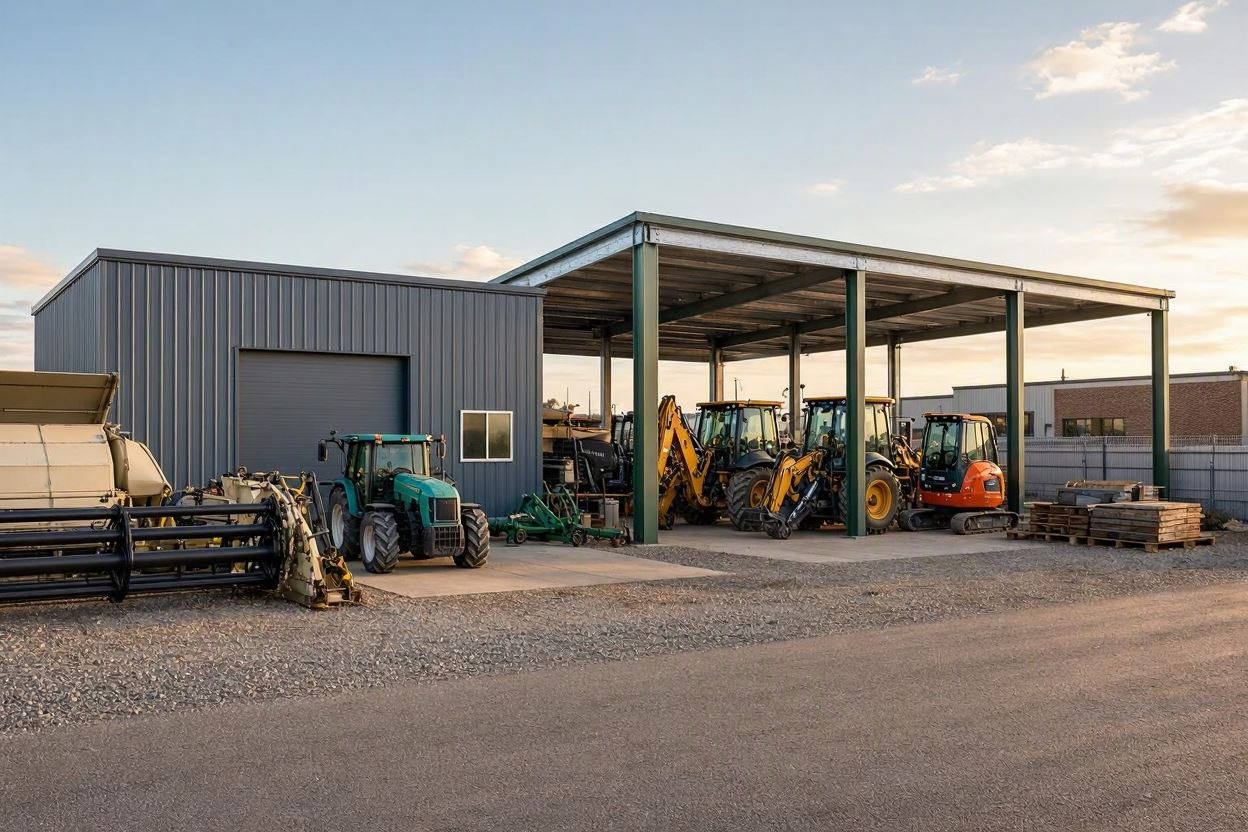
Outdoor equipment storage should protect machinery from unnecessary weather exposure while keeping it accessible for the work it needs to perform. The right solution depends on equipment size, storage duration, local conditions, security requirements, available space and how frequently the machinery is used.
For some businesses, an enclosed metal shed or garage is practical. Others may need a large covered shelter that allows equipment to be moved in and out quickly. Choosing between these options starts with understanding what the equipment needs from its storage environment.
What Makes Outdoor Equipment Storage Effective?
Good outdoor equipment storage balances four basic requirements: protection, accessibility, available space and the way the equipment is used.
A storage structure should provide enough clearance for the machinery, allow practical access, and suit the surrounding property. It should also be appropriate for the type of exposure the equipment will face.
Construction machinery, farm implements, vehicles and smaller tools do not necessarily require the same storage approach. A compact piece of equipment may fit inside an enclosed shed, while larger machinery may be easier to manage beneath a covered shelter.
Enclosed Storage vs. Covered Shelter
The biggest decision is often whether equipment should be placed inside an enclosed structure or underneath a roofed shelter.
Enclosed Storage
A metal shed or garage creates a more contained storage environment. It can be useful when equipment needs to be kept out of direct exposure and when controlled access is important.
Enclosed storage may suit:
- Hand tools and smaller equipment
- Compact machinery
- Maintenance supplies
- Equipment that is not used every day
- Businesses that need additional secured storage
An enclosed structure also requires careful planning for door dimensions, interior clearance and equipment movement.
Covered Storage
A covered shelter provides overhead protection while keeping the sides open or substantially accessible. This can be useful for larger machinery that needs to move in and out frequently.
Covered storage may work well for:
- Tractors and agricultural machinery
- Construction equipment
- Trailers
- Vehicles
- Large implements
- Equipment that needs quick access
The choice is not simply about which structure is larger. It is about matching the storage format to the workflow.
How Do You Choose the Right Storage Size?
Storage dimensions should be based on the equipment that will actually occupy the structure.
Start by measuring the length, width and height of the largest item. Then consider how the machinery will enter, turn and leave the storage area.
Door placement matters for enclosed structures, while the height and width of a covered shelter affect how easily large equipment can be positioned underneath it.
It is also worth considering future requirements. A storage structure designed only around today’s equipment may become restrictive if the business later adds another tractor, skid steer, trailer or piece of construction machinery.
Protecting Equipment From Weather Exposure
Outdoor equipment can encounter rain, sunlight, dust, wind and changing temperatures. Storage does not eliminate every environmental concern, but the structure can reduce unnecessary exposure.
The appropriate protection depends on the equipment and operating environment.
For example, an enclosed metal shed can provide a more contained area for smaller equipment, while a large canopy can provide overhead coverage for machinery that is difficult to move into a conventional building.
Ventilation can also matter. Equipment brought in from outdoor work may carry moisture, dirt or debris. Storage planning should therefore consider not only protection from the outside environment but also how the equipment will be accessed and maintained inside the structure.
Examples of Practical Storage Configurations
Different equipment-storage projects call for different configurations.
A 10′ x 20′ Plus Upgraded Metal Shed with Double Front Doors & Side Entry Door represents an enclosed storage approach where multiple access points can be useful for organizing equipment and moving items through the structure.
For substantially larger equipment-storage requirements, a 40’x40’x13′ Shipping Container Canopy Shelter represents a covered approach with significant open storage space. A structure of this type can be considered when equipment dimensions and access requirements make enclosed storage less practical.
These examples illustrate an important point: storage should be selected around the equipment and workflow rather than around a generic idea of what a shed or shelter should provide.
When comparing different configurations, businesses researching Chery Industrial storage solutions can consider storage structures alongside other industrial equipment categories as part of their planning process.
What About Construction Equipment?
Construction equipment often presents a different storage challenge because machines can be large, heavy and frequently moved between jobsites.
A skid steer, excavator or attachment may need to leave storage several times during a working week. In this situation, convenient access can be nearly as important as protection.
Equipment should also be parked where workers can inspect it, perform routine maintenance and connect or remove attachments without creating unnecessary obstacles.
For example, a skid steer with a rock bucket or auger should have enough surrounding space for safe equipment handling. Larger machines may require greater entrance clearance and a storage structure with sufficient height.
What About Farm and Ranch Equipment?
Farm and ranch operations may store tractors, implements, trailers, livestock equipment and maintenance tools in the same general area.
The storage plan should account for seasonal use. Equipment used daily during a particular period may need easier access than machinery that remains stored for longer periods.
Livestock-related equipment introduces another consideration: organization. A Cattle Work Chute Manual Headgate, for example, belongs to a different equipment category from a tractor or storage shelter, but keeping livestock-handling equipment organized can help prevent it from being misplaced among general farm machinery.
Separating frequently used equipment from seasonal or specialized items can make a storage area easier to manage.
How Should You Plan Access and Security?
Access should be considered before the structure is installed.
Ask practical questions:
- Can the largest machine enter without difficulty?
- Is there enough room to maneuver?
- Can workers reach stored equipment without moving several other items?
- Are doors positioned for the property’s traffic pattern?
- Does the storage area need controlled access?
- Will equipment need to be connected to trailers or moved directly into a work area?
Security requirements vary according to the equipment and property. Enclosed structures may provide more controlled access, while open shelters prioritize convenience and rapid movement.
A Simple Outdoor Storage Checklist
Before selecting a storage solution, review these factors:
- Equipment dimensions: Measure the largest machinery and attachments.
- Access requirements: Determine how frequently equipment enters and leaves.
- Storage format: Decide whether enclosed or covered storage better suits the operation.
- Clearance: Allow adequate room for doors, maneuvering and maintenance.
- Weather exposure: Consider the environmental conditions affecting stored equipment.
- Future equipment: Leave reasonable capacity for changing operational needs.
- Security: Determine whether enclosed access is important.
- Workflow: Position storage so equipment can move efficiently between storage and work areas.
Final Considerations
Effective outdoor equipment storage is ultimately about matching the structure to the machinery and the way the property operates. Enclosed sheds can provide a more contained storage environment, while large covered shelters can make sense for equipment that requires frequent and convenient access.
By evaluating equipment dimensions, weather exposure, access, security, maintenance needs and future capacity before choosing a structure, businesses can create a storage area that supports both equipment protection and everyday workflow.